Leon Hartmann · 11 September 2026
Unpacking App Developments and Policy Adjustments for Novice Metal Fabricators
Metal fabrication has seen steady integration of digital tools that support entry-level practitioners, and app developments have played a central role in streamlining design processes, inventory tracking, and safety protocols. These applications often connect directly with CNC machines and welding equipment, allowing users to import CAD files, simulate cuts, and monitor material usage in real time. Data from industry reports indicate that adoption rates among small workshops rose notably between 2023 and 2025, driven by cloud-based platforms that reduce hardware costs for beginners.
Key App Developments in Fabrication Workflows
Developers have focused on mobile and desktop applications that combine augmented reality overlays with traditional measurement tools, enabling fabricators to visualize joint alignments before physical work begins. One study released by a Canadian research institute in 2024 documented how such features cut setup errors by 18 percent in training environments. Apps also incorporate regulatory checklists that pull updates from government databases, so users receive alerts about changes in material handling standards without separate research. Integration with 3D scanning hardware further allows novices to convert physical prototypes into editable models, a process that previously required specialized software licenses.
Policy adjustments have paralleled these technological shifts. In the United States the Occupational Safety and Health Administration updated guidelines on machine guarding and ventilation requirements, effective through phased rollouts that began in late 2024. Similar revisions appeared in European Union directives on emissions control for metal processing facilities, where smaller operations received extended compliance timelines compared with larger plants. Observers note that these changes emphasize documentation and training records, areas where many new apps now provide automated logging features.
Policy Adjustments Across Regions and Their Practical Effects
Regulatory bodies in Australia introduced updated codes for hazardous substance management in fabrication shops during 2025, requiring digital record-keeping for chemical inventories. These rules align with broader environmental reporting frameworks that link to national databases, and several apps have added export functions to meet those formats. In parallel, Canadian provincial authorities adjusted apprenticeship standards to include verified hours logged through approved digital platforms, reducing paperwork for both trainees and supervisors. Such adjustments create direct incentives for workshops to adopt compatible applications rather than maintain manual logs.
Research indicates that the overlap between app features and compliance needs has produced hybrid tools. For instance, applications developed in partnership with academic programs now embed modules that track exposure limits for welding fumes and generate reports suitable for audits. Figures released by the European Agency for Safety and Health at Work highlight a 12 percent increase in digital training completions among metalworking apprentices in member states following the release of these integrated options.
Intersection of Technology and Regulation for Entry-Level Users
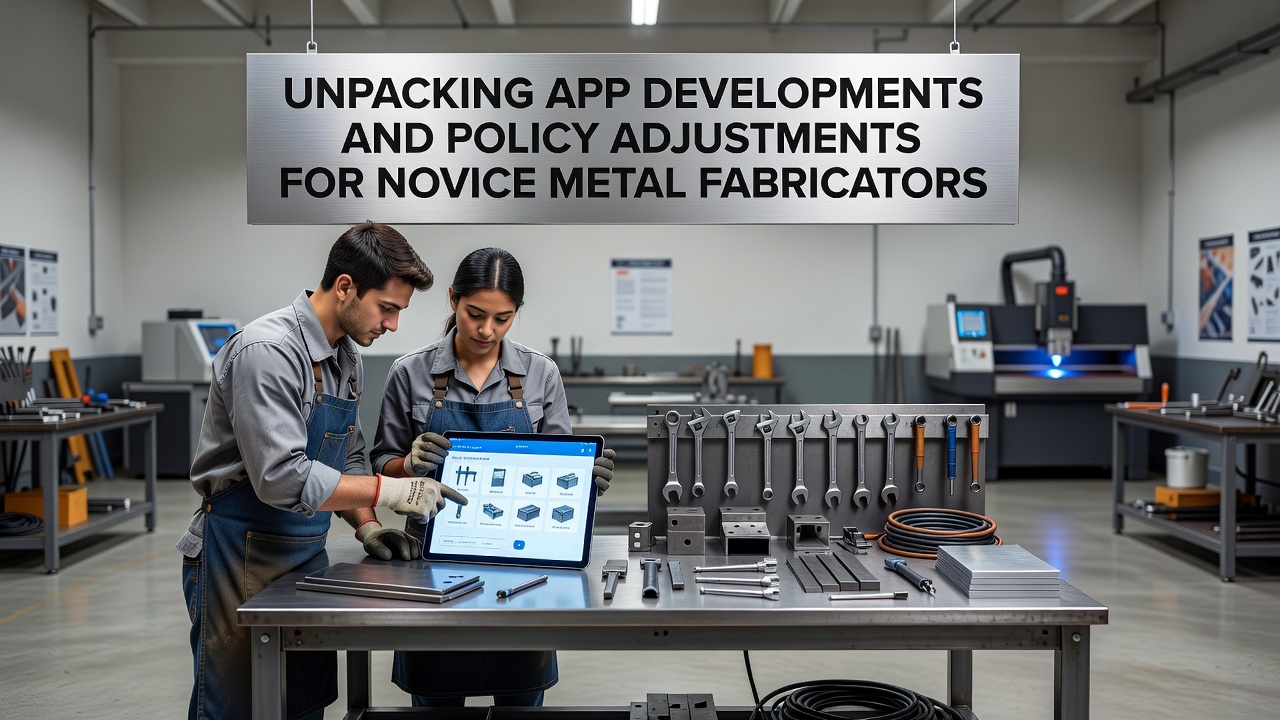
Novice fabricators encounter these developments most directly through onboarding sequences in fabrication software. Many platforms now include region-specific policy modules that update automatically when new standards take effect. A September 2026 milestone appears on several implementation calendars, when certain North American jurisdictions plan to require electronic submission of safety inspection data for facilities employing fewer than ten workers. Developers have responded by building secure upload pathways into existing apps, ensuring that data collected during daily operations flows directly into regulatory portals.
Industry organizations have documented case examples where workshops combined app-based scheduling with revised environmental reporting to maintain continuous compliance. These instances show that policy adjustments often reward consistent digital record-keeping, because automated timestamps and version histories satisfy audit requirements more readily than paper files. Academic reviews of fabrication education programs further reveal that curricula increasingly embed app proficiency alongside traditional shop skills, reflecting the expectation that new entrants will manage both physical processes and regulatory documentation through the same interfaces.
Looking Ahead to Implementation Timelines
Additional policy updates scheduled for late 2026 focus on traceability of recycled metals and energy consumption reporting. Applications that already capture machine runtime and material sourcing data stand positioned to accommodate these requirements with minimal custom development. Trade associations across multiple continents continue to publish compatibility lists that help novices identify tools meeting both technical and regulatory criteria. The pattern emerging from these parallel tracks suggests that app evolution and policy refinement will remain closely linked, with each cycle of regulatory change prompting corresponding software enhancements.
Conclusion
App developments and policy adjustments together shape the operational landscape for novice metal fabricators by linking design assistance, compliance tracking, and training resources within unified digital environments. Regional variations in safety, environmental, and training rules continue to drive feature additions in fabrication software, while scheduled milestones such as the September 2026 reporting requirements create clear benchmarks for adoption. Available data from government agencies and research institutions demonstrate measurable impacts on error reduction and documentation efficiency when these tools align with current standards.